
Home vs. Contents: What Your Insurance Policy Actually Covers
The same room can contain both building items and contents — and your insurer may value them differently.
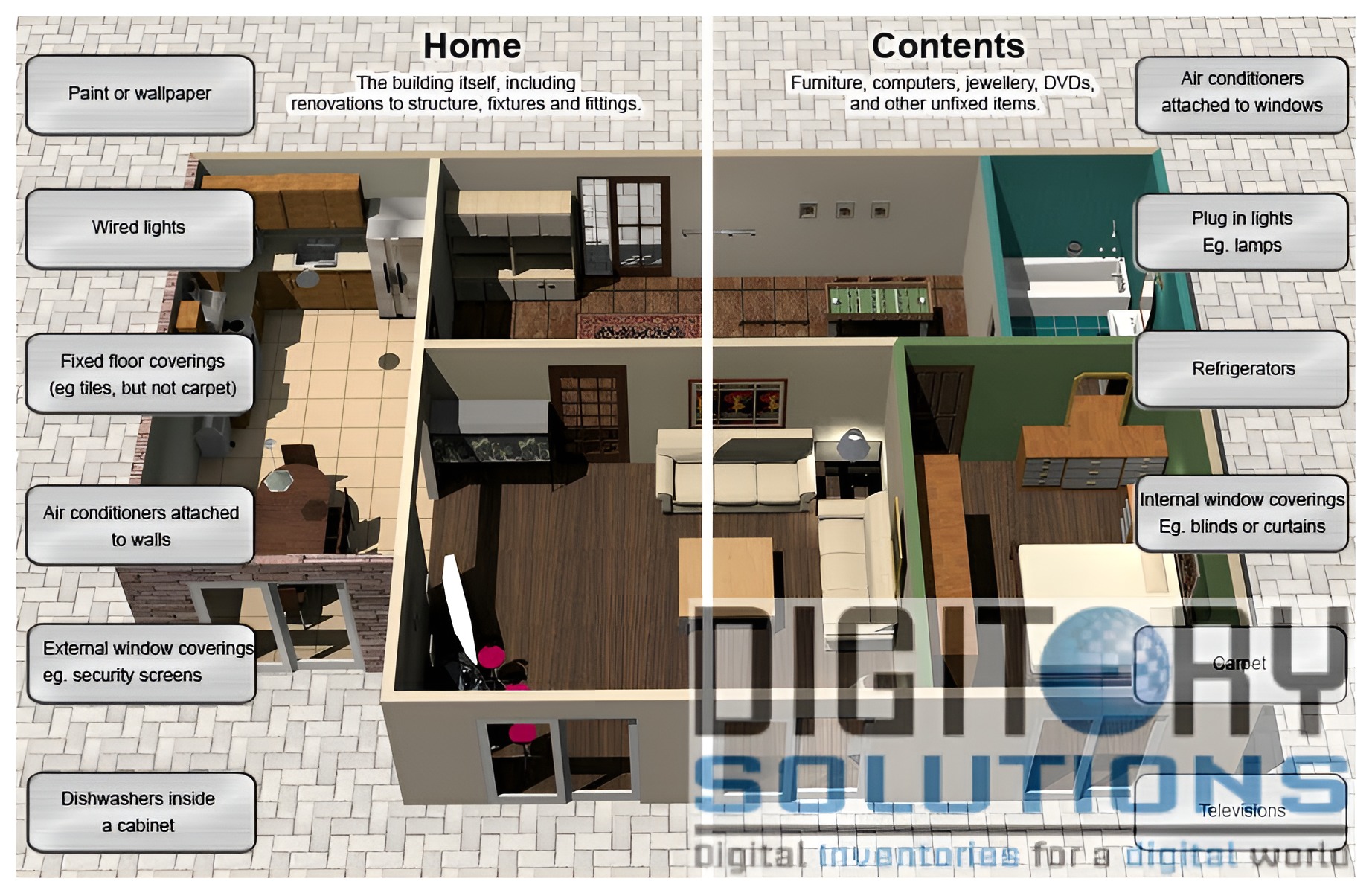
One of the most common points of confusion after a property loss is whether damaged items are part of the building or part of the contents. The answer determines which coverage applies, which deductible applies, and how the item is valued.
Home: Building, Fixtures, and Fittings
These are generally considered part of the dwelling or building coverage:
- Paint or wallpaper
- Wired-in ceiling lights
- Fixed floor coverings such as tile
- Wall-mounted air conditioners
- External window coverings such as security screens
- Built-in dishwashers
Contents: Unfixed Personal Property
These are generally considered personal property under Coverage C:
- Window-mounted air conditioners
- Plug-in lamps and lights
- Refrigerators
- Internal window coverings such as blinds and curtains
- Carpet
- Televisions
Why the Distinction Matters
Building coverage and contents coverage have different limits, deductibles, and valuation rules. A refrigerator may be replaced under contents coverage, while a built-in dishwasher may fall under building coverage. Carpet is usually contents; tile is usually building. A wall-mounted air conditioner may be building, while a window unit is contents.
After a loss, insurers often dispute where the line is drawn. A complete photo inventory with item-by-item descriptions helps avoid these disputes and supports the correct coverage allocation.
Learn how Digitory documents both building and contents after a loss.